by Rashid Yahya Ali
“There are no great men. Just great challenges which ordinary men, out of necessity, are forced by circumstance to meet.” Admiral Halsey
Prologue
 Somalia
One thing is for certain though, it is guaranteed, if we insist on continuing our current path, all will perish.
Pause and ponder for a minute. The death toll since 1990 – from the outbreak of the civil war- exceeds 3 million and is still counting. The number of internally displaced persons, the cost of destruction of property and human suffering is profound and staggering.
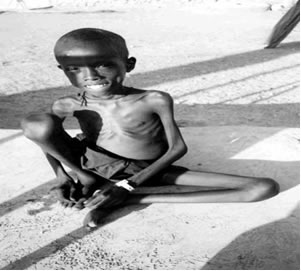
Hardly a day goes by without heart wrenching painful Somali deaths; from drowning in the Gulf of Aden, indiscriminate shelling of civilian areas, starvation in the refugee camps and among the displaced persons, slayings and other violence committed against non-combatant civilians, not to mention the countless other human grief and losses.
Obviously; our plight is not a manifestation of a divine punishment, or caused by violent seismic disruptions under our feet, nor is it due to a widespread affliction of an epidemic plague.
In contrast to the state of
Apparently; the marginalization and utter neglect of certain sectors of the population or entire communities has greatley contributed to the strife in our country. Favoritism and putting the needs of one community over others is the principal cause fueling the violence. When the power and the resources of the state are put to use for rewarding close circles of clan based benefactors at the expense of everyone else, surely, seeds of distrust, conflict, and societal fragmentation, the exact conditions of
If we are ever to wake up from this horrific nightmare; it is imperative that other men and women of better humanity with the capacity to perceive the potential of our people and that which is achievable in our country should rise and give direction. Men and women, sons and daughters in our midst, who can “show the way by going first”[1] must lead.
Every Somali is yearning for peace and praying for authentic leaders who understand the menace of injustice and the promise of the law of equality among citizens and who can uphold and protect the rights of each and all.
The principle of “universal and reciprocal recognition, where every citizen recognizes the dignity and humanity of every other citizen, and where that dignity is recognized in turn by the state through the granting of rights”[2] is the remedy for nepotism and artificial governance. No other arrangement of human social institution is better able to satisfy the longing for peace.
Conformance with those universal principles of humanity guarantees that the calamities of war and its horrors, long and painful as they may be, will eventually give way to a state of peace and healing, because it is the nature of mankind to seek peaceful coexistence.
For preserving humanity, peace is a necessity. The Creator has engendered in man a unique ability to reason, which in its profound wisdom compels a sense of duty on all human beings to desist aggression and become master of the evil in them, while at the sametime hoping the same from others in order to maintain and safeguard peace and harmony among men.
Therefore; when in a state of conflict, mankind cherishes security and has a deep longing for safety. The one thing that man loathes most is dying violent death, the assured end result of recourse to war. Hence; warfare by its very nature is an untenable evil enterprise.
Now, as Somalis, our yearning for peace is indeed genuine for we are also part of humanity, plus the long suffering we endured, achieving peace should be within our realm of possibility.
Reason to Hope:
The departure of Yusuf, the interim president of the
Indeed; the state of our affairs is frightening. I am afraid for
If men of questionable qualifications or lacking moral uprightness were to succeed Yusuf, with similar framework of mindset and shallowness, lacking vision and common concern for the suffering of fellow human beings, then an identical outcome, similar to the demise and painful disgrace of Yusuf’s downfall, not mentioning the cost of human life and waste, positively, beyond any doubt, awaits us.
“A leader is a person who has an unusual degree of power to create the conditions under which other people must live and move and have their being, conditions that can be as illuminating as heaven or as shadowy as hell. A leader must take special responsibility for what’s going on inside his or her own self, inside his or her consciousness, lest the act of leadership do more harm than good.”[3]
Yusuf’s leadership has done more harm than good. It exacerbated the misery and compounded the suffering of the innocent exponentially. Afflicted with delusional clannish allegiance above loyalty and devotion to nation, he neglected the primary and most fundamental duty of the presidency: to promote unity, protect and serve the people and the country.
It is therefore a duty incumbent upon all of us not to repeat the same mistakes and never again allow the same men, people made of the same fabric with the same moral bearings, character and outlook of life, woefully ill equipped to lead a nation, become our leaders.
“True leaders are those who epitomize the general sense of the community -- who symbolize, legitimize and strengthen behavior in accordance with the sense of the community -- who enable its shared purpose, values and beliefs to emerge and be transmitted. A true leader's behavior is induced by the behavior of every individual choosing where to be led.”[4]
Building Up from Traditional Roots:
History has proven that societies who possess the means and the capability to organize have far better chances in achieving peace and harmony among its subjects. The prospects for peace are more promising when the organizational structure of a society is modeled and is underpinned by solemn respect and adherence to the principles of freedom to all members of society and the law of equality to all citizens.
In every corner of
Though unfairly tabooed and caricatured with terms of permittivity and backwardness, rarely do hostilities within the community flare-up to levels that endanger common wellbeing or threaten safety of members. Disagreements with potential ramifications to sudden outbreaks of violence, disorder and bloodshed are timely addressed and are brought under control. There are chieftains, religious scholars and elders whose primary social duty is the community’s self preservation through mediation with fairness, objectivity and with absolute transparency where all members participate deliberations.
Therefore, with little improvements and input from our intellectuals and scholars, we can build-on from this already existing structure, reinforcing it and extending it to the next level.
Nevertheless; for this social design to work, it is of utmost importance to accept the fundamental right of every community to determine its fate and that no one else has a right to dictate to them how they should live and who is to rule them. Once this fundamental principal is respected and upheld, this social nucleus could blossom and grow.
For instance; if every village (sub-sub-clan) is allowed the freedom to elect its mayor, judges, police commissioner, treasurer, school principle and public works administrator, then that particular community will be empowered to effectively serve its members in the highest capacity possible. However, if on the other hand, all public officials are selected for them by some supreme all knowing Wiseman, somewhere far away, those officials will naturally seek to please their master before they serve their subjects.
Additionally, under this form of local autonomy, not only are citizens empowered, but also the corrosive and the corrupting zeal with which government posts are sought as source of income and power is removed and in its place service to the people becomes paramount.
Now, once this small social unit takes root and establishes norms and rules among its members; it is natural that it must also coexist with other neighboring communities who also have succeeded in instituting stable bases for their localities. To preserve peace and cooperation, then it follows that through negotiations, social contracts covering peace treaties and agreements on sharing resources, i.e.; grazing areas, watering wells, intercommunal travel, trade and conflict resolutions will be implemented between adjoining communities.
Then, as trust goes up greater openness, reflection, goodwill, compassion, and understanding also spreads.
From this edifice, a new purpose emerges from which the number of individuals under the umbrella of peace expands.
If, for instance; members of a tribe, populating in a particular region of the republic were to succeed in achieving viable and legitimate local authorities that respect human rights and the rule of law among their members, where visionary and learned leaders guide the way with goodwill and strong determination; never forgetting their place and duty to the larger picture of belonging to one nation and the inseparability of their fate, good or bad, from the rest of the country, then surely, such a framework could be adopted to spread peace and harmony among the Somali people.
Certainty; many would rightly say “but not one single tribe or clan exclusively inhabits one particular region and there are many other minorities.”
Precisely, if the central truth and our guiding conviction is firmly anchored on the principle of universal and reciprocal recognition and the inviolability of the individual right, that every Somali citizen, irrespective of clan or locality, has the Allah given right to life, the freedom and the liberty to elect whom s/he chooses; then there should be no concerns of abuse.
Again, others also hold deeply flawed premises that somehow, federalism weakens the unity of the Nation. Quite the contrary, it strengthens the bond that binds the people. We must recognize every human being’s ability and right to choose.
When a legitimate federal authority, based on the will of the people through authentic and popularly elected representatives, administer the affairs of the nation, then the will of the people demands the preservation of the nation and its wellbeing. Such a government does not undermine unity but promotes a sense of union and common shared destiny.
“The more we develop socially, morally, and emotionally, the more we see things as ‘us’ rather than ‘me vs. you’ or ‘us vs. them.’ The more we are able to do this, the deeper the unity we feel with a wider variety of people and things around us and the more we mature as human beings.”[5]
Therefore; our salvation lies in re-configuring and completely restructuring our communal organizations.
Furthermore; no nation on earth has ever achieved peace and harmony, progress or development without harnessing the collective potential of its people.
We need visionaries in the field of social science, economy and management. We need doctors to heal, engineers to build and accountants. To adequately feed our people, we need agricultural experts and veterinarians. We need archeologists and geologists to exploit the treasures under our feet.
Above all, we need religious scholars who don’t burden themselves to be the guardians of “the divine will on earth” for that is an office too great for a man to claim.
The overwhelming majority of us are not responsible for the pitiful conditions we find ourselves mired in, but the way we respond in the face of those challenges is entirely our choosing and solely our responsibility.
Rashid Yahya Ali
[1] William Isaacs: Dialogue and the Art of Thinking Together; October 1999
[2] Fakuyama, Francis. 1992. The End of History and the Last Man. (
[3] Parker Palmer; Author, Educator and an Activist
[4] Dee Hock; founder and former CEO of the VISA credit card association
[5] Sato