
By FREDERIC J. FROMMER
Wednesday, December 06, 2006
 |
|
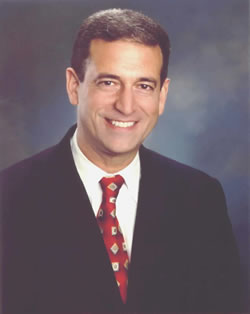
Sen. Russ Feingold (D-WI) |
Feingold, who will chair the Senate Foreign Relations African Affairs subcommittee next year, visited Ethiopia and Kenya, two countries that neighbor Somalia, during his weeklong trip. An Islamic militia has taken over much of Somalia, including the capital, and the country's prime minister said this week his troops were bracing for war.
"The stakes are very high for us," Feingold said in a telephone interview with The Associated Press.
He warned that the militants could have an impact not just in Somalia, but in the entire region. The U.S. has said the Islamic movement has links to al-Qaida, which Islamic leaders deny.
"So this is just the kind of situation that we should be paying real attention to, instead of only obsessing about Iraq," Feingold said. "Our failure to have a policy in this area is a threat to the American people, and our government has a very serious responsibility to turn this around."
Feingold won passage in October of a defense bill amendment that requires the U.S. government to coordinate a comprehensive strategy for Somalia and the region.
Sen. Norm Coleman, R-Minn., who co-sponsored that amendment, said he agreed "that a major problem with U.S. policy on Somalia in recent history has been its absence."
"A failed state in this part of the world would be a security threat to our nation, and we need a robust strategy to ensure that this does not happen," he said.
Feingold said Tuesday that U.S. policy should be to try to get negotiations going between the current secular government, known as the transitional federal government, and the Union of Islamic Courts, the umbrella group behind the militia, to create a coalition government in Somalia. The U.S. has supported such a dialogue, but Feingold argued it hasn't done enough to start one.
In Minnesota's Somali community, the largest in the United States, American policy is a huge concern, said Omar Jamal, executive director of the St. Paul-based Somali Justice Advocacy Center.
"Somalis feel that the administration hasn't done anything on the Somali issue," Jamal said. "The administration's main focus was the war on terror, and right in front of our eyes, Somalia is run over by Taliban-style extremists. The administration hasn't done squat."
Meanwhile, Feingold praised the impact that President Bush's AIDS initiative has had on the countries he visited. The initiative, announced in 2003, targets 15 countries which have about half of the world's 39 million people who are HIV-positive.
"It's hard to ever describe this issue as good news, but I am proud of the effect that the president's program is having," Feingold said. "We received profuse thanks for the very significant funding increases that are going into it.
"It appears that both in both Ethiopia and Kenya, the government is fully behind the efforts, and sees the American bilateral aid as being one of the most important things."
Feingold said that while more needs to be done, the progress has been striking. He said he visited a slum in Kenya in 2002, where he witnessed a "pitiful" program to help people with AIDS.
"There was absolutely no money whatsoever for treatment," he said. "Now there is significant funding - not enough - but at least significant funding to treat people who already have AIDS."
Source: AP, Dec 06, 2006